Virginia Astley
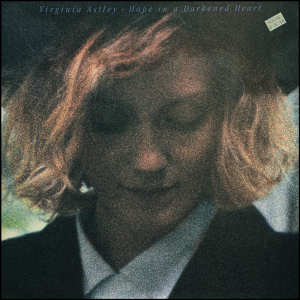
The problem with being a cult favorite is that not many people know who you are. For an artist such as Virginia Astley, who has worked with a number of well-known collaborators, it means a life’s work existing largely in the shadows: an occasional cover version appearing on Spotify, or an expensive vinyl import selling for hundreds of dollars on Discogs.
Astley has always been known more for the company she keeps than her own recorded output, having played on sessions with such artists as Siouxsie and the Banshees and Pete Townshend. Classically trained on piano and flute, Astley comes from a musical family: her father was a television composer, and her brother Jon’s production credits include Eric Clapton, the Rolling Stones, the Who, and many others.
Astley began her career collaborating on recordings that landed her on my favorite Belgian record label, Les Disques Du Crépuscule. Despite her strong credentials to that point, Astley didn’t start writing and releasing her own material until the early 1980s. After being invited to tour with psychedelic pop band The Teardrop Explodes, Astley recruited Nicky Holland and Kate St. John to join her as a performing outfit. The three called themselves The Ravishing Beauties for a series of gigs, then disbanded in 1982.
(If those names sound familiar, by the way, they should. Holland ended up playing a strong support role in the mid-1980s heyday of Tears For Fears, while St. John enjoyed worldwide success with the Dream Academy and contributed to session recordings by Van Morrison and Bill Nelson).
Following a number of false starts as a solo artist, Astley released her debut From Gardens Where We Feel Secure in 1983 on her own label. The record is nearly all instrumental and evokes visions of pastoral summer afternoons in the countryside, combining piano, flute, and woodwinds with tape loops of animal sounds and church bells. Locating the album in its original pressing is nearly impossible; I once saw a Japanese import CD for nearly $200 (USD) in a New York record shop. Being a British artist with a distinctly English sensibility, in fact, it’s interesting to note that Astley has a fervently huge following in Japan.
Perhaps that’s where the story of Hope In a Darkened Heart should begin. Japanese composer Ryuichi Sakamoto was reportedly a longtime fan of Astley’s work, so the two made for a inevitable partnership given their shared penchant for atmospheric classicism. With fellow astronaut David Sylvian making an appearance on the album, you might assume that the songs contained within are nothing more than twee ambient doodling: sonic wallpaper as vaporous as the August mist rising off a dewy-fresh patch of morning grass. And that’s where you’d be wrong.
Background
There are many days where I would declare Ryuichi Sakamoto to be one the most important composers, arrangers, and producers of his time. If you’re familiar with his work, especially his 1980s output, you can already envision the sound of Hope In a Darkened Heart. Comprised of both new material and remakes of earlier tracks, Sakamoto thickens Astley’s compositions with synthesized strings, electronic mallets, pianos, and drum machines. It’s still quite pastoral, with exciting new colors and textures added to the sonic palette.
There is more substance lyrically as well. Astley’s choirboy soprano, which had previously been heard on the single “Loves a Lonely Place to Be” off her Promise Nothing compilation, combines the delicacy of the music with words of angry resentment. Astley was a single mother at the time, the child’s father having left Astley during her pregnancy. It is a startling and effective dichotomy between Astley’s restrained vitriol and the dignified musical setting in which it resides.
It is this combination that elevates Hope In a Darkened Heart as more than a precious 1980s synth-ambient artifact, transcending into a significant personal work that enhances the corporeality of its subject matter. Resonating with an elegant, seething fury, the album is the equivalent of a scorned woman quietly but firmly informing her ex that he is no longer welcome in their home.
Tracks
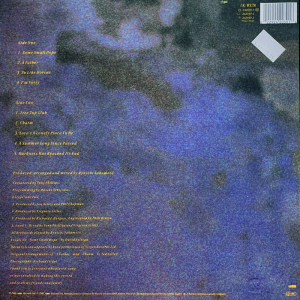
The album begins with “Some Small Hope,” a duet with Astley and Sylvian amid gently syncopated synth arpeggios and a lovely reed solo. Sakamoto plays all the keyboards, and it’s quite impressive how clean and organic it all sounds. The last several stanzas are exceptional, Astley’s soprano actually providing the grounding for Sylvian’s quiet theatrics.
“A Father” houses scathing lyrics in a trippy little waltz, ostensibly to the man who abandoned her and her unborn child: “You’ve run away / And never, no, never / Shall I see you again / But will haunt you forever.” Such treatment would be a bit dramatic in the hands of less sophisticated practitioners, but it works in this case.
Astley takes the gloves off on “So Like Dorian,” my favorite track on the album. Sakamoto sets up a gentle environment for Astley to rip her ex a new one: “I’ve heard all your lies / Your boring tall tales / I’ve tasted your tongue / Like a worm from the grave / Had you inside me / Then like a rock beside me.” Damn, I hope nobody ever talks about me like this. What makes the song wonderful is how Sakamoto changes keys at each stanza, minor chords to major scales and back again, before applying some interesting tape loops in the form of a solo. The track builds upon this lovely tension, then Astley closes out this kiss-off to her ex with one more kick to the groin: “I’ve seen into your soul / And I know it’s been sold.” Ouch.
In comparison, “I’m Sorry” shows a bit of contrition: “I can’t confess all these things / But I’m sorry for all I’ve said.” Sakamoto sets up another luxurious bed of woodwinds, synths, and some sort of percussion that made me think of music from the Scottish Highlands. I love the sax solo that weaves through the verses; there are moments where Astley’s voice operates more as a tonal instrument than to carry the melody, and I think it’s an interesting approach.
“Tree Top Club” begins side two of Hope In a Darkened Heart with a wave of sawtooths and strings before collapsing into an insistent rhythm. Astley sings about themes from childhood—hiding in sheds, riding bikes to the sweet shop, buying comic books—before asking the important question we all face when we reach adulthood: “My life is always compromise / Oh, tell me why it’s all a senseless lie.” Wish I could, Virginia, but if you find out before I do please let me know.
“Charm” is another slow waltz; I’m reminded a bit of Tuxedomoon on this track. Hearing it again just now, I seriously wonder what someone like Trent Reznor could do with this. There are many moments on Hope In a Darkened Heart, in fact, that would work quite well as post-industrial tracks with a few dystopian tweaks. Just putting it out there.
“Love’s a Lonely Place To Be” is the single, and if you bop up and down to “Map of the World (Part II)” by Jane Siberry then you may like this. Granted that Astley is a classically trained English musician, and Siberry is a Canadian microbiologist who started off as folk singer, but still. It wasn’t until listening recently that I captured something of a relationship between their respective bodies of work.
The instrumental “A Summer Long Since Passed” follows. It’s an update of the same track from Astley’s first album, with rotating pianos and church bells supporting Astley’s “la la la” vocals. It’s all very agreeable and sets up the final track, “Darkness Has Reached Its End,” as a relatively upbeat closer. “Iron, it rusts as stone decays / And force shall always / Wipe away the tears from your eye.” Combined with the softly swaying music and acoustic guitars, the song has an almost Irish feel to it and assures us that maybe Virginia’s going to be all right.
Aftermath
Astley recorded a few more albums and contributed tracks to one or two film soundtracks for the balance of the 1980s. She then retired to the countryside to raise her daughter, Florence, cultivating a second career as an acclaimed writer. Astley’s projects include a series of novels, a prize-winning collection of poetry, and spoken narrative pieces she performs live, with Florence accompanying her on harp. Astley became writer-in-residence at Thomas Hardy’s Cottage in 2017. Thankfully, her long-out-of-print albums are now available on Bandcamp.
My only real criticisms of the album are that the songs tend to sound alike after a while, and not all of the production techniques have dated equally well (it was 1986, after all). That said, there is more to Virginia Astley’s discography than classical little vignettes seemingly pulled from a Frances Hodgson Burnett novel. For the discerning yet open-minded listener, there is genuine depth in Astley’s work that rewards investment.
Reply