L.T.D.

“You said a moment ago that everybody you look at seems to be a rabbit,” says the doctor to his patient in a 1937 cartoon by James Thurber. “Now just what do you mean by that, Mrs. Sprague?” Meanwhile, Mrs. Sprague recoils in horror at the vision of her therapist’s enlarged, leporine head.
Easter traditions in North America typically involve a mythological rabbit breaking into people’s homes and hiding baskets of goodies. Upon awakening, children tear apart the furniture cushions in an attempt to locate and devour the contents of their baskets. If you believe that practice disentangles the holiday’s Christian origins into something wholly surreal and borderline horrific, I’m inclined to agree.
Regardless of my uneasiness with this whole rabbit thing, the Easter tradition in our family was the morning search for baskets. On one particular occasion, when I was maybe twelve years old, I lived with my mother and two younger brothers in a tiny first-floor apartment. It was a reasonably nice but small place, given that our family didn’t have much income in those days, and as a result there weren’t many places for an oversized, benevolent rodent to festively hide Easter baskets.
I found my basket in the dishwasher, of all places, and was delighted to see a handful of vinyl records amid the fake plastic grass. All were clearly purchased from the cutout bins, which was fine as I was always discovering new music with as little financial investment as possible. One record was a soundtrack album for a movie that nobody seems to remember, including me. (Seriously, I attempted to find the film on IMDb and had no luck. Something to do with a bus, or basketball, starring a guy with a beard. I forget the title). I remember that record only because it had a Boz Scaggs song on it that I somewhat liked.
Another record was by Frank Hooker and the Positive People. What I remember most about that album was that every song had some sort of spoken monologue where the lead singer would literally introduce himself after the sax solo. “By the way, my name is Frank,” he’d coo into the microphone, like a creepy telemarketer selling me a cemetery plot. I quickly surpassed my threshold of tolerance for Frank’s speed-dating soliloquies, permanently shelving the Positive People next to my brother’s copy of The Youth of Today by Musical Youth.
The remaining two albums are still in my collection: Light Up the Night by the Brothers Johnson, and Togetherness by L.T.D. I played the hell out of those two records; I loved the melodic grooves, the crystalline production values, the slap bass plucked like fruit from a tree, the smooth yet propulsive Telecaster riffs. You wouldn’t have known it by my physical presentation in those days, me being a short skinny white kid who read Thurber, but I loved classic R&B/Philly soul and these two albums fit right into my aesthetic of choice.
Background
L.T.D. is an acronym for Love Togetherness & Devotion. The band formed in North Carolina, eventually relocating to New York before settling in Los Angeles. Along the way, they found a drummer in Rhode Island who could sing a little bit. His name was Jeffrey Osborne, and L.T.D. turned out to be the launching pad that propelled Osborne’s successful solo career. First, though, he recorded a handful of antiseptically clean R&B albums with a dozen or so musicians.
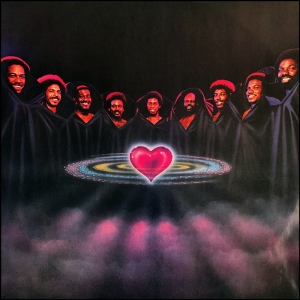
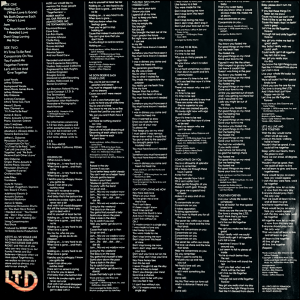
Togetherness was the band’s fifth studio album, released in 1978, and if you like that smooth 1970’s sound then this is right in your wheelhouse. Instrumental credits include celeste, clavinet, flugelhorn, orchestra bells, trombone, flute, saxophone, guitar, and percussion. Producer Bobby Martin was already an architect of such arrangements as “Me and Mrs. Jones” by Billy Paul, as well as the chart-topping Saturday Night Fever soundtrack a year earlier. Togetherness isn’t a disco record, but it has a touch of that flavor applied to what are mostly ballads and upbeat funk-pop songs.
L.T.D. to this point had already been called “artificially sweet” by one critic, and their overblown arrangements were considered too ‘safe’ for Black radio of that era. I can’t say for certain what that means in the context of, say, the O’Jays or Isaac Hayes, but L.T.D. certainly had their share of successful singles until Osborne embarked on his solo career in 1981. Much of their output was overproduced and schmaltzy, to be fair, but those were the times in which we lived, and L.T.D. backed it up with solid songwriting chops and fine musicianship. I like what I like and don’t apologize for it, nor should you.
Tracks
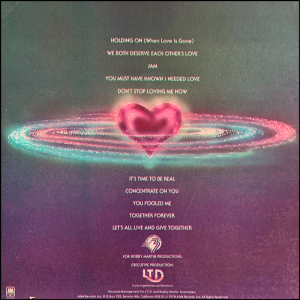
Togetherness begins with the group’s most successful single, “Holding On (When Loves Is Gone).” Right away, the L.T.D. formula is in full throttle: Osborne’s voice carries the melody while the brass section floats underneath. Between them are some lovely background harmonies. Lyrically, it’s your typical jeez-man-get-a-grip-on-yourself advice column set to music: “Oh I betcha lie awake nights, and never rest a bit / And wish it all would disappear / But still the bottom line is you got to deal with it / And to yourself at least be fair.” Hey, he’s right! The bridge takes a darker turn, however, when those same background vocalists literally laugh in ridicule: “Ha, ha, ha, who are you kidding?” What is this, Jeffrey, I thought you were on my side. Still, the tune slaps.
That’s followed by “We Both Deserve Each Other’s Love,” a requisite for slow-dancing couples at weddings and anniversary parties the past four decades. It’s sentimental and sappy, and the song probably still makes your parents weep like they did watching the last episode of The Golden Girls, but I think it’s terrific. And anyway, didn’t the great philosopher Nick Lowe once write, “What’s so funny about peace, love, and understanding?”
“Jam” brings the groove back, with some funky clavinet and bass popping in sync, while those same background vocalists make noises like “bow wow wadda wow” and “dadee-dat da da, DAAAAA.” Lyrically, it’s all about living in the city, hanging with the boys, scowling at your boss, staking out the clubs, and getting down with your girl. I approve.
“You Must Have Known I needed Love” keeps the party going. You have clavinets and acoustic piano keeping time, with a string orchestra adding stabs of emphasis. This is the point of the album where it’s evident what a vocal talent Osborne was; he croons, he growls, he yelps, every note held perfectly under his command.
That’s followed by “Don’t Stop Loving Me Now,” which adds wah-wah guitar and plucky bass to a relatively spartan mix. The verses unfold into a beautiful chorus, with male and female vocals taking turns on the refrain.
The same is true for “It’s Time to Be Real,” which kicks off side two. This dance workout for brass and strings is the closest the album gets to disco, at least as far as the drumming is concerned. There’s a great little trumpet solo while all sorts of percussion clatter in the background. The lyrics beg us to “do away with ego and conceit,” which sounds better to these ears coming from Jeffrey Osborne and company than anything Frank Hooker’s Positive People tried to sell me.
“Concentrate On You” is another ballad made for slow-dancing. I like the little flute twirls, the lightly tapped conga drums, and Osborne’s falsetto on the chorus. It’s not as classic as “We Both Deserve Each Other’s Love,” but it’ll make you sway back and forth while washing the dishes after a nice meal with your life partner.
“You Fooled Me” is fine, although at this point most of the tracks start to sound the same. It’s not bad; it simply resembles at least three songs on the album we’ve already heard. Same with “Together Forever,” which sounds like an extension of “Jam.”
The formula wears a bit thin on the preceding two or three tracks, which makes “Let’s All Live and Give Together Now” a slight revelation. The group’s gospel leanings come through here, the groove is funky while restrained, and I’m reminded a bit of “Tell Me Something Good” by Rufus and Chaka Khan. It’s a nice way to end things.
Aftermath
L.T.D. released two more albums before Osborne left the band and transitioned into one of the up-and-coming voices of the 1980s. Members came and went over the ensuing decade. After a lengthy hiatus, a newly reconstituted lineup was created in 1999 that still tours today. Sadly, at least four of the original members have since passed.
Maybe L.T.D. were too ‘safe’ and “artificially sweet” for some listeners, but the opinion here is that being nice is not a trait to be dismissed in haste, and L.T.D. deserve more recognition than condemnation for possessing this underrated quality.
For me personally, Togetherness represents something of a closure. Shortly after that Easter, my mother remarried, our family bought a house, puberty arrived in all its awkward glory, and I started listening to music that was harder and weirder than anything L.T.D. ever dared commit to vinyl. I’ll always have a soft spot for this record, however, as both demarcation and affirmation. It’s still the best thing I ever found in the dishwasher left by an imaginary rabbit.
Grade: B (7.3/10)
Reply